
Should I Roll My 401(k) Into a Gold IRA?
Concerns over inflation and a potential market downturn are causing many Americans to question the safety of their retirement savings. More and more Americans are considering buying gold, which has a long reputation as an inflation hedge and safe haven asset. A 401(k) to gold IRA rollover allows you to move retirement assets into physical […] The post Should I Roll My 401(k) Into a Gold IRA? appeared first on Top Rated Gold IRA Company - Goldco Precious Metals.

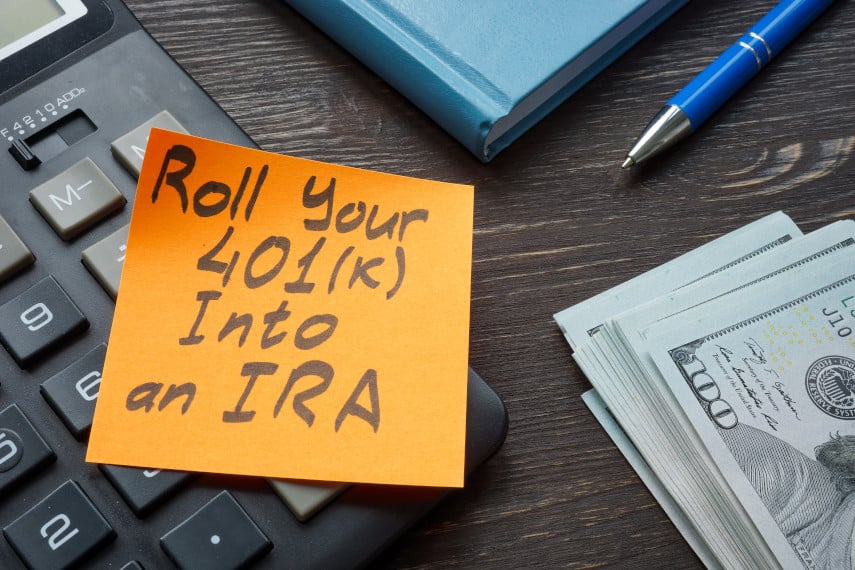
- Concerns over inflation and a potential market downturn are causing many Americans to question the safety of their retirement savings.
- More and more Americans are considering buying gold, which has a long reputation as an inflation hedge and safe haven asset.
- A 401(k) to gold IRA rollover allows you to move retirement assets into physical gold coins and gold bars tax-free, allowing you to help protect your retirement savings with physical precious metals.
Americans hold over $30 trillion in retirement savings across 401(k) and IRA accounts, making up a significant portion of retirement savings for millions of hardworking employees. Yet as bond market volatility, a rising national debt, and persistent inflation continue to feed economic uncertainty, many Americans are asking themselves just how safe their 401(k) assets truly are.
With many 401(k) accounts limited in their asset options to conventional financial assets such as exchange-traded funds (ETFs), mutual funds, or bond funds, many Americans’ retirement savings are tied to the well-being of Wall Street. How can they best preserve their wealth in the face of a declining dollar and potential market downturns?
One increasingly popular method of helping protect their nest eggs is through rolling over assets from a 401(k) into a self-directed gold IRA. But before starting a gold IRA, you need to understand the process, rules, and potential benefits of making a 401(k) to gold IRA rollover.
What Is a Gold IRA?
A gold IRA is a type of self-directed IRA that allows you to acquire physical precious metals coins or bars within a tax-advantaged retirement account. While most 401(k) and IRA accounts are limited to acquiring paper financial assets such as stocks, bonds, mutual funds, and ETFs, a gold IRA actually owns physical gold coins or gold bars that are stored securely in a bullion depository.
Gold IRAs are subject to the same tax laws and regulations as any other IRA account, and can be set up either as a Traditional IRA or as a Roth IRA:
- A Traditional gold IRA is funded using pre-tax dollars, your assets appreciate tax-free during the period you hold them, and taxes are only assessed when you take a distribution.
- A Roth gold IRA is funded with post-tax dollars, your assets gain value tax-free, and qualified distributions are also tax-free.
Most IRA custodians don’t offer precious metals IRA services. To start a gold IRA you’ll need to find a self-directed IRA custodian who specializes in alternative assets such as precious metals. If you partner with Goldco, we can help you select an IRA custodian who can manage your precious metals assets.
How Does a 401(k) to Gold IRA Rollover Work?
An IRA rollover occurs when you move funds from a retirement plan such as a 401(k), 403(b), TSP, or similar account into an IRA account. These rollovers can often be done tax-free and penalty-free.
Many 401(k) plans offer only a limited array of assets, and between fund expense ratios and plan management fees can siphon off a significant portion of your asset gains each year in fees. If 401(k) plans do offer exposure to precious metals, it is normally through exposure to funds that own shares in gold mining companies, or through precious metals ETFs, neither of which actually allow you to own physical gold.
- A 401(k) to IRA rollover can give you greater flexibility and more asset choices, allowing you to use your funds to acquire a wider range of assets, including physical gold coins or gold bars.
- Direct rollovers send funds straight to your IRA, avoiding taxes and penalties.
- Rollover contributions are not subject to annual IRA contribution limits, which are currently $7,500 in 2026, or $8,600 if you’re over age 50. This allows you to roll over as much as you want, whether $25,000, $50,000, or even $1,000,000 or more, in a single transaction.
Direct vs. Indirect Rollovers: The Rules You Need to Follow
When you choose to execute a rollover from your retirement plan to an IRA, you’ll normally be given two different choices: a direct rollover and an indirect rollover. Knowing the difference between these two types of rollovers is crucial to avoid the potential for taxes and penalties.
- In a direct rollover, your 401(k) plan administrator sends funds directly to your new gold IRA custodian.
- In an indirect rollover, your 401(k) plan distributes funds directly to you, minus mandatory withholding for federal income taxes.
- You must then deposit the entire rollover sum, including the withheld taxes, into your gold IRA within 60 days.
- Any funds not deposited into your gold IRA within that 60-day window are considered distributions, and can trigger both income taxes and early withdrawal penalties if you are under age 59½.
Because of the mandatory tax withholding, the need to come up with additional funds to make up for that withholding, and the potential taxes and penalties, most people performing a 401(k) to gold IRA rollover prefer to do a direct rollover to ensure that their rollover remains tax- and penalty-free.

401(k)s vs. Gold IRAs: A Side-by-Side Comparison
Before deciding whether a 401(k) to gold IRA rollover is right for you, it can be helpful to compare some of the key aspects of 401(k) and gold IRA accounts.
|
Feature |
401(k) Plan |
Gold IRA |
| Assets Owned | Generally paper assets, e.g. mutual funds, ETFs, stocks and bonds | Physical precious metals, including gold, silver, platinum, and palladium |
| Asset Choice | Limited to options selected by 401(k) plan administrator | Any IRA-eligible precious metal coin or bar you choose |
| Annual Contribution Limit (2026) | $24,500 ($32,500 if over age 50; $35,750 if ages 60-63) | $7,500 ($8,600 if over age 50) |
| Rollover Contribution Limit | Subject to plan terms | Unlimited |
| Annual Fees | Normally between 0.5% and 2% of assets under management | Average of about $250 per year |
| Distribution Options | Cash only | Cash or in-kind distribution of physical metals |
3 Benefits of Rolling a 401(k) Into a Gold IRA
If you have spent decades building up wealth for retirement, the last thing you want to happen is for your hard-earned assets to lose value due to economic volatility and market downturns. Here are three ways that a gold IRA can help you.
1. Wealth Growth and Preservation
When you own physical gold within a gold IRA, that gold isn’t reliant on Wall Street’s performance for its value. Gold often moves independently of financial markets, with low correlation to stocks.
Gold has a reputation for rising in price when markets are doing poorly, such as during the 2008 financial crisis when gold prices rose 25% during the same period that stocks fell more than 50%. But gold can also make gains during periods when stocks are doing well, such as 2025, when the S&P 500 gained 17.9% but the gold price rose 65%.
2. Hedge Against Inflation and Dollar Devaluation
While inflation rates are lower than they were in 2022, they remain elevated. Decades of money supply expansion and federal deficit spending have led to a national debt that is growing out of control and a dollar that is debased more and more each year.
- Since the closing of the gold window in 1971, the US dollar has lost over 88% of its purchasing power, while the gold price has risen over 10,000%.
- During the stagflation of the 1970s, the gold price rose at an annualized rate of over 30% per year over the course of the decade, far higher than double-digit inflation that peaked at nearly 13%.
- In 2025, increased safe haven demand for gold helped drive the gold price to an annual gain of 65%.
3. Portfolio Diversification
Would you consider a portfolio that holds a mix of stocks and bonds truly diversified? That’s a question you should ask yourself, as well as your financial advisor.
While some people may believe that a mix of stocks and bonds is enough to diversify a portfolio, what happens when both stocks and bonds lose money, such as during the 2008 financial crisis, or more recently in 2022?
In the event of a systemic crisis, both stocks and bonds can lose value. Because gold has a low correlation to stocks and tends to perform well when stocks are not, it can play a role in helping diversify your portfolio, giving you the potential to offset or mitigate losses in the event of a potential market downturn.
Considerations When Thinking About a 401(k) Rollover
While a gold IRA can offer safe haven protection, there are a few things about gold IRAs you need to keep in mind:
- Physical precious metals in an IRA do not pay dividends or interest, their gains some solely from increases in the prices of precious metals.
- IRS regulations require all physical metals in a gold IRA to be stored in a bullion depository, which means that you’ll have to pay annual fees for storage.
- Moving assets from an active 401(k) plan may not be possible if your current plan does not permit “in-service” distributions.
- While 401(k) accounts generally are protected against creditors under ERISA, IRAs may or may not be, depending on your state’s laws.
- If you leave your employer in the calendar year you turn 55 or later, the “Rule of 55” permits penalty-free 401(k) withdrawals from your employer’s 401(k) plan, whereas IRA withdrawals have to wait until age 59½ or face a 10% penalty.
IRS Rules Regarding Precious Metals
Gold IRAs are subject to the same rules and regulations as any other IRA account. Like all IRA accounts, gold IRAs are prohibited from acquiring collectibles, which includes metals and coins, although there are specific exemptions for certain types of coins and metals.
1. Purity Requirements
To be eligible for IRA acquisition, precious metals must be “any gold, silver, platinum, or palladium bullion of a fineness equal to or exceeding the minimum fineness that a contract market (as described in section 5 of the Commodity Exchange Act, 7 U.S.C. 7) requires for metals which may be delivered in satisfaction of a regulated futures contract”.
- Gold bullion must meet a minimum fineness of .995 (99.5% pure gold).
- Silver bullion must meet a minimum fineness of .999 (99.9% pure silver).
- Platinum bullion must meet a minimum fineness of .9995 (99.95% pure platinum).
- Palladium bullion must meet a minimum fineness of .9995 (99.95% pure palladium).
2. Approved vs. Non-Approved Coins
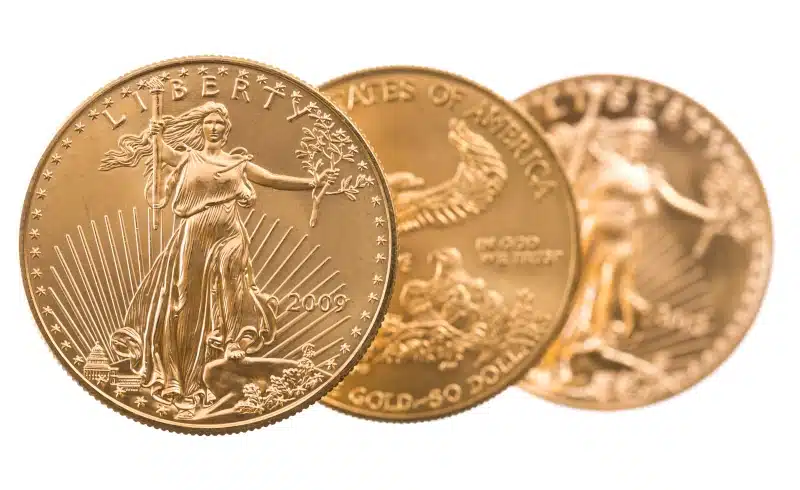
The Internal Revenue Code also makes a special exception for the American Gold Eagle series of coins, whose 22-karat (.9167 fineness; 91.67% pure gold) composition would otherwise make them ineligible for IRA acquisition.
Aside from this one exception, other gold coins acquired by an IRA must meet the .995 fineness standard as described above. Examples of coins that are eligible for IRA acquisition include:
- American Gold Eagle
- American Buffalo
- Canadian Gold Maple Leaf
- Australian Saltwater Crocodile
- British Lunar Series
Examples of popular bullion coins that would not be IRA-eligible are:
- South African Krugerrand
- UK Sovereign
- Pre-1933 US Gold Coins
- Austrian 100 Corona
- Swiss 20 Franc Vreneli
- French 20 Franc
Using IRA assets to purchase ineligible coins would be considered a distribution of assets, and could trigger both taxes and penalties. You can avoid that potential liability by working with a trusted partner like Goldco. Goldco works with mints around the world to bring IRA-eligible coins direct from the source to our customers.
3. Gold IRA Custodian and Depository Requirements
Federal law requires that all IRA assets must be managed by a custodian. All precious metals held by an IRA must be stored in a bullion depository, you cannot store IRA precious metals at home.
If you’ve been searching for gold IRA information online, you may have come across something called a “home storage gold IRA.” These purport to allow you to start a gold IRA and store your gold IRA assets at home.
These arrangements have been found by tax courts to violate tax law. Anyone attempting a home storage IRA is at risk of both taxes and penalties, as starting a home storage gold IRA is considered a taxable distribution of IRA assets.
This is why it helps to work with established partners like Goldco, so that by working with our specialists you can avoid the potential pitfalls of schemes like home storage IRAs. Goldco’s specialists work with you to navigate the gold IRA rollover process, including choosing a gold IRA custodian and selecting a bullion depository to store your gold IRA assets.
3 Easy Steps to Performing a Gold IRA Rollover
A 401(k) to gold IRA rollover can be a simple and straightforward process that normally takes just a couple of weeks from start to finish. And it can be done in three easy steps.
- Step 1: Open Your Gold IRA Account: Complete your customer agreement with Goldco and establish your gold IRA with your chosen custodian.
- Step 2: Initiate Your 401(k) Rollover: Request that your current 401(k) plan administrator send funds from your 401(k) account to your gold IRA custodian.
- Step 3: Select and Purchase Your IRA-Eligible Gold: Once your gold IRA is funded, you can then select the IRA-eligible gold coins or gold bars you wish to purchase. These will then be shipped securely to the bullion depository you choose.
Is a 401(k) to Gold Rollover Right for You?
Determining whether to roll over your 401(k) into a gold IRA ultimately depends on your personal financial goals, your time horizon, and your outlook on the American economy.
If you believe that a $40 trillion national debt isn’t a problem, that the US dollar will remain the world’s reserve currency forever, and that we’ll never again experience a recession, then maybe your current 401(k) suits your needs. But if you’re concerned about persistent inflation, market volatility, and the possibility of an economic downturn, then maybe it’s time to start giving gold some thought.
Goldco has established itself as one of the best gold companies in the country, with over $3 billion in precious metals placements and more than 8,000 5-star reviews. Our precious metals specialists work with you throughout the rollover process and always go the extra mile to make sure that our customers are satisfied with their precious metals purchases.
Don’t wait for a market downturn before you start looking into the benefits of owning gold. Contact Goldco today to learn more about how you might be able to benefit from a 401(k) to gold IRA rollover.
This article was originally published in May 2023 and was updated in October 2026.
The post Should I Roll My 401(k) Into a Gold IRA? appeared first on Top Rated Gold IRA Company - Goldco Precious Metals.